
What is Sustainability?

According to the Oxford dictionary, sustainability is “The ability to be maintained at a certain rate or level”. We see this word everywhere, it is a buzzword of sorts among major organisations, institutions, and every Multi-National Corporation across the globe. Is it still a goal we strive to? Or a marketing campaign used to help us offload the guilt of our destructive behaviour.
Let us create an example to better understand the basic principle of sustainability. Imagine I have 5 trees, and I need to use 1 tree every year. If my trees only take 1 year to grow that is sustainable. As I am not depleting my resources. Now, if we assume it actually takes 10 years to grow a tree, then my resources will be completely used up in 5 years, and I won’t have another fully grown tree that can be utilized. That doesn’t sound very sustainable.
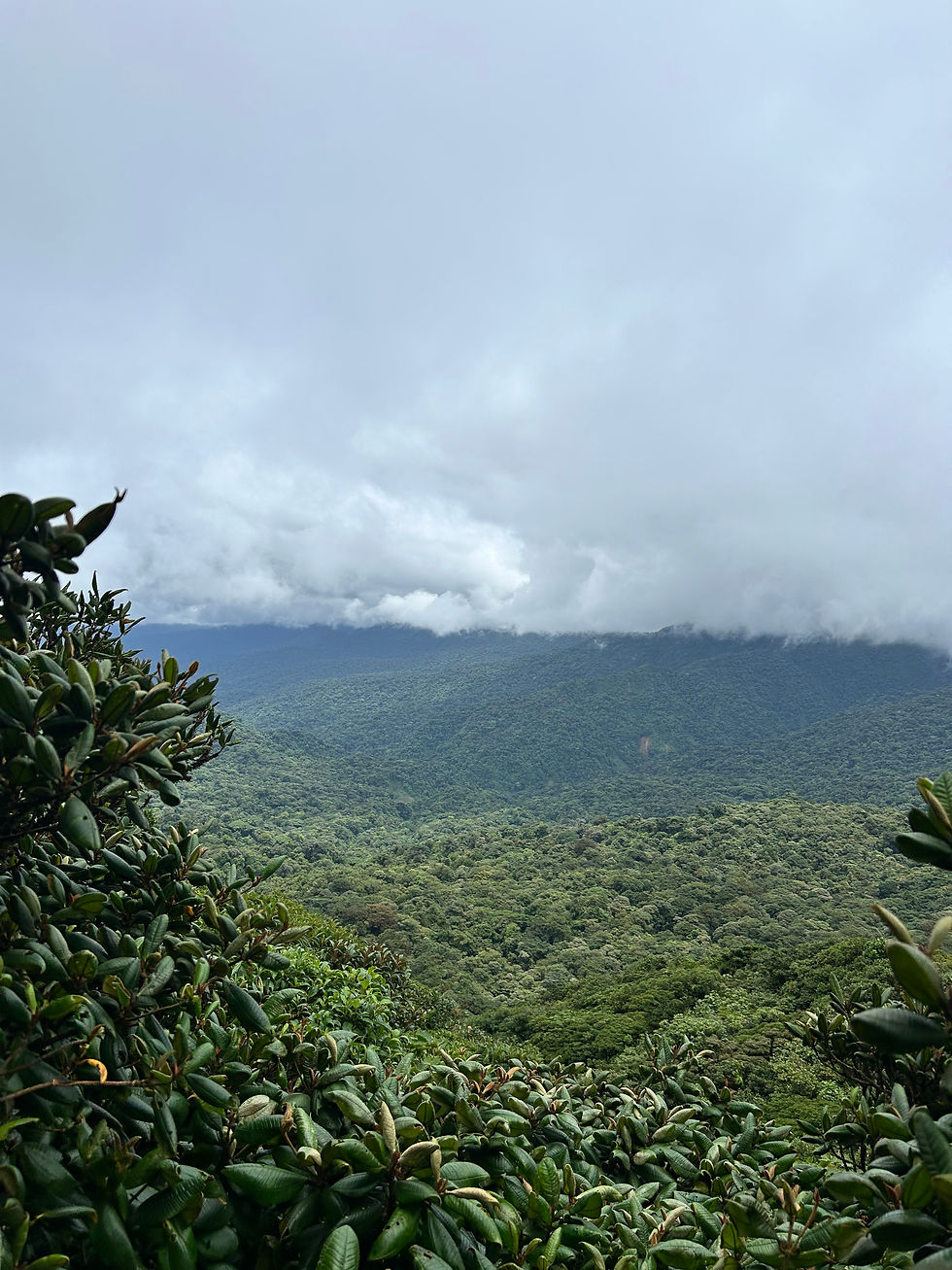
While this is a basic version, it is the true essence of our entire climate crisis and will put many people at risk of food insecurity, flooding in areas and drought in others. At our current rate of consumption of fossil fuels, deforestation, water usage, and carbon production. We are far from sustainable. This is where change is necessary, now we aren’t saying to never travel and to never shower but the best thing we can do as individuals is to be conscious of our usage. Limiting single-use plastics, using public transport where possible and buying second hand clothes are all viable options that the everyday person can do, just to help that little bit.
The current biggest issues are the lack of alternatives to unsustainable practices, and this is an issue that has been growing and developing since the industrial revolution. An overdependence on fossil fuels - while more than brilliant to boost the economy circa 1800s – has proven to be detrimental in more modern times. We as a country will have to look for alternatives, or our unsustainable practices will have detrimental impacts.
With the emergence of the Sustainable development goals, we saw an outline of what it meant to be a sustainable person, country, organisation, and globe. An almost blueprint-like pathway that could ensure the growth of our own economies and economies around the world, in a way that focuses on protecting our environment and people. This is one of the major difficulties in battling the climate crisis. While something may be economically sustainable, it does not guarantee it is environmentally sustainable. For example, the current methods of producing clothes, this is a process renowned for being water depleting, however with a massive clothing industry and major demands we continue to act in an economically and socially sustainably way, even at the cost of the environment. This is true on the flip side, I am sure many of us have been made aware of the environmentally conscious electric cars, prided on sustainability, and while they do reduce emissions (if we are only taking into consideration from the car) they come at a high price tag and there have been many questions raised over the sustainability of the production of lithium – a very important material in producing car batteries.
From the text above we can already see how sustainability can go from being an issue of just a few trees to being an entire labyrinth of economic, social and environmental considerations that must be planned for before taking drastic action. However, one thing is very clear, with environmental sustainability, there will be vast consequences of continuing our current consumption. This is going to have lasting impacts on the people and the economy, even if we act in an economically and socially sustainable manner. Due to our extreme dependence on the environment. So, I ask you one question. Should we continue to protect our profits, or should our environment be our number one priority?
We would love to hear from you and hear your thoughts, feel free to navigate to our “sign up” section and share your story!


Comments