
What is Seagrass and Why use it?

Seagrass is a form of marine plant; it is the only flowering plant within the marine environment. With around 60 species of seagrass belonging to 4 different family groups. While hey may just be commonly mistaken for just another plant in the ocean this would be quite the misconception. In Northern Ireland for example, they have quite a vital role in how our coastal environments are protected and maintained. Particularly in coastal meadow zones such as Strangford Lough. They provide a wide range of services in our marine environments such as coastal protection and the support of fisheries. They can also be credited with enhancing biodiversity by improving the water quality and maintaining the nutrient cycle. There is also one more incredibly important role of the seagrass, acting as a blue- carbon habitat due to their astounding ability to store and sequester copious amounts of CO2.
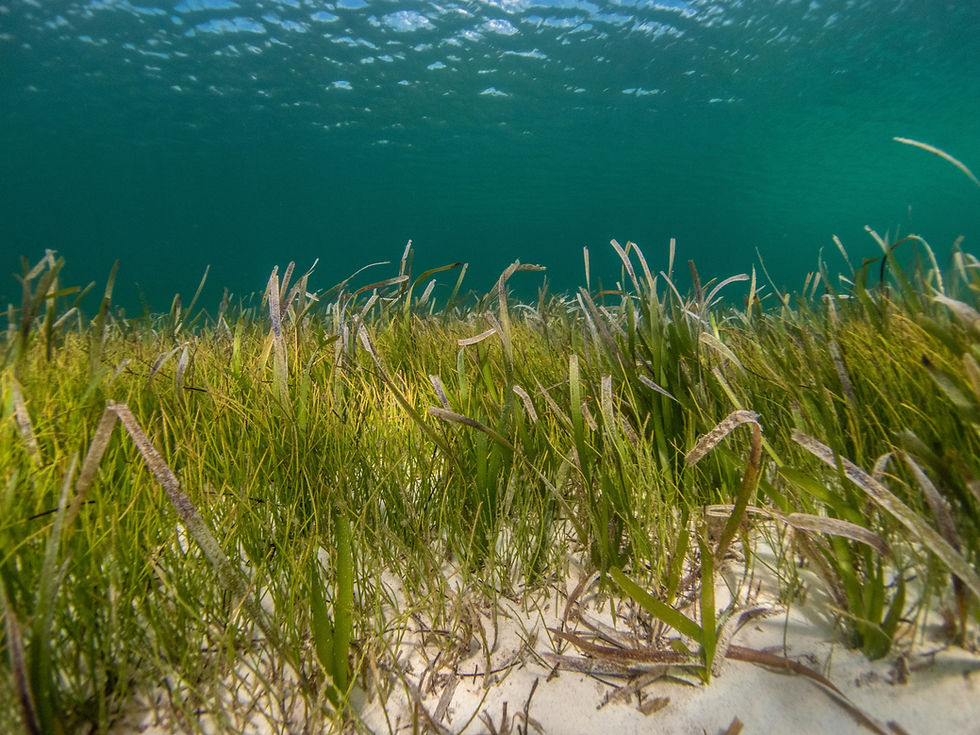
With this in mind, what is the math behind Seagrasses CO2 consumption? Well, this is where it gets interesting… According to “Seagrass ecosystems as a Globally Significant Carbon Stock” - which is one of the first analysis of seagrass on a global scale – The testing conducted resulted in a total of up to 80,000 metric tons of Carbon per square kilometre. This is due to Seagrass’ ability to store Carbon in the soil below it. When we compare this to our ‘gold standard’ form of carbon uptake in the form of trees, well, we can see the true difference in ability. According to the same paper, a typical forest stores around 30,000 metric tons per square kilometre where the carbon is stored mostly in the wood. This is a massive change in what we had previously believed about the carbon capture abilities of the ocean. We also do not want to give the impression that we can rely solely on Seagrass to save us. According to the UN, seagrass only covers roughly 300,000km2, in comparison to the 40.4 million km2 of forests across the globe according to the world bank. This is purely showing us that there are new things to be learned about carbon capture. However, according to UN, Seagrass is one of the least protected coastal ecosystems in the world and we are currently losing 7% of this ecosystem being lost per year. This is due to coastal development and climate change in some areas, and in others it is the result of anchoring and trampling.
With the revelation of how good this resource is, came the dawn of new research and policy to help try and recover what we have lost and to safeguard it for future generations. We see this in the release of ‘The Ramsar Convention on wetlands’ which provides a policy framework which help us understand the methods that can potentially be followed to protect seagrass and other coastal ecosystems. There are currently 172 countries that have signed this agreement including the United Kingdom who has been a member since 1976, protecting a marine area of 1,288,856Ha under the Ramsar Framework. There are currently 19 protected areas right on our own coasts here in Northern Ireland. This has been widely successful however it does not deal with the continued issue that seagrass areas are still decreasing, a vital resource that we simply cannot afford to lose if we want to remain in the fight against climate change.

Is there anyone currently combatting the issue of seagrass dieback in Northern Ireland? In short, No. We also view this as being a major issue going forward. We do have areas that are protected such as Lough Foyle and Strangford Lough. However, there are no active regeneration attempts being made, this could end up being quite the oversight. These areas are almost perfect for seagrass growth due to their low turbulence and sheltered topography. These areas are in high demand along coastlines, particularly in the island of Ireland which as such an exposed coastline along the west coast. By establishing a seagrass conservation project in Northern Ireland, we can promote healthier ecosystems and ensure we continue to make use of this vital carbon capture system.
If you liked this content or want to share your experience on this topic, please reach out by going to the contact us page!


Comments